The French property market is going through a pivotal period, facing major challenges while showing signs of recovery. The current economic environment is complex and calls for in-depth analysis in order to navigate the sector effectively. This barometer aims to provide that analysis by exploring the economic, political and social factors that influence investment decisions.
A central point of the report is the identification of current trends and forecasts for 2024: understanding how changes in interest rates, geopolitical uncertainty and new environmental regulations are affecting the property market. The report also identifies the segments with the greatest potential for growth and return, while acknowledging the challenges to be overcome, such as high construction costs and strict regulations.
01Economic context
The property market continues to face several major obstacles. One of the main challenges is the persistent gap between buyers’ and sellers’ expectations. Purchase and sale prices are not converging, which slows transactions and creates uncertainty about the true value of properties. This imbalance is often aggravated by optimistic valuations on the part of sellers, based on earlier market conditions. Buyers, for their part, aware of the economic uncertainty, are reluctant to pay high prices without significant adjustments.
This divergence creates an environment in which transactions are frequently delayed, negotiations drag on and the overall volume of sales falls. Property valuers play a crucial role here by providing objective and independent valuations: their expertise helps to bring the expectations of both parties closer together.
Economic and political uncertainty is another significant obstacle. Fluctuating interest rates and geopolitical turbulence have a negative influence on investment decisions. At the same time, strict environmental regulations, although necessary, add a layer of complexity and cost for developers. High material prices and a shortage of skilled labour also limit the profitability of new projects.
Despite these challenges, several indicators suggest that the market could be starting to recover. In 2024, the reduction in allocations to commercial property relative to equities and bonds is less pronounced than in 2023, indicating a stabilisation of investment flows. Property also continues to act as a hedge against inflation, and the ECB’s monetary policy, with an expected cut in key interest rates, could strengthen investor confidence.
02Investment volume and forecasts
The volume of investment in commercial property in France for 2024 is forecast at €9.3 billion. This figure remains well below pre-crisis levels: €25.9 billion in 2022 and around €32.2 billion in 2019. The pandemic marked a turning point (€22.6 billion in 2020), and 2023 fell to less than €12 billion, a level comparable to the aftermath of the global financial crisis.
Forecasts for 2025 show a slight improvement, with volume expected at €11.4 billion. The stabilisation of interest rates, or even a cut in key rates, could reduce the cost of borrowing and make investment more attractive, while a slight compression of prime yields on certain asset types could stimulate quality investment.
03Key sectors and opportunities
Logistics and last mile
- Scarcity of land: the limited availability of sites suited to urban logistics is driving up rents and demand, pushing investors towards peri-urban areas and the reappraisal of existing space.
- 2024 Olympic Games: the preparations are stimulating demand for logistics infrastructure and increasing the value of properties close to areas of high activity.
- Rising take-up: according to the MSCI Barometer, 49% of investors expect take-up of logistics warehouses to increase, particularly those of less than 5,000 m² intended for last-mile use, and 65% expect rents to rise.
Hotels and healthcare property
- Post-Covid recovery: the recovery in tourism and the return to normal travel are revitalising the hotel sector, reinforced by the prospect of the Olympic Games; mid-range hotels are benefiting from attractive yields.
- Healthcare property: demand for healthcare facilities remains strong. Clinics, hospitals and care centres offer stability and resilience in the face of economic crises.
Residential
- Coliving and student residences: these sub-segments are favoured because of their attractive yields and constant demand.
- Management and renovation challenges: costs are rising as a result of rent regulations and the environmental upgrading of buildings.
- Rent control regulations: these measures can reduce profitability; investors need to factor them into their long-term strategy.
04Challenges and barriers to investment
The mismatch between supply and demand remains the main obstacle: diverging views on asset values, greater caution among buyers, protracted negotiations. The role of property valuers therefore becomes crucial: independent and objective valuations help to establish realistic market prices.
Uncertainty over fundraising by investment vehicles (SCPI, OPCI) is affecting market liquidity: volatility, increased competition between investment products, growing regulatory requirements.
High construction and renovation costs are a significant barrier: rising material prices, a shortage of skilled labour, environmental requirements. The number of housing starts has fallen by 60% compared with the previous year, reducing the supply of new projects.
05Office market
Remote working and the rationalisation of space are transforming the market: companies are reducing their property footprint in favour of smaller but better-designed spaces, and flexible solutions (coworking, flex office) are gaining ground.
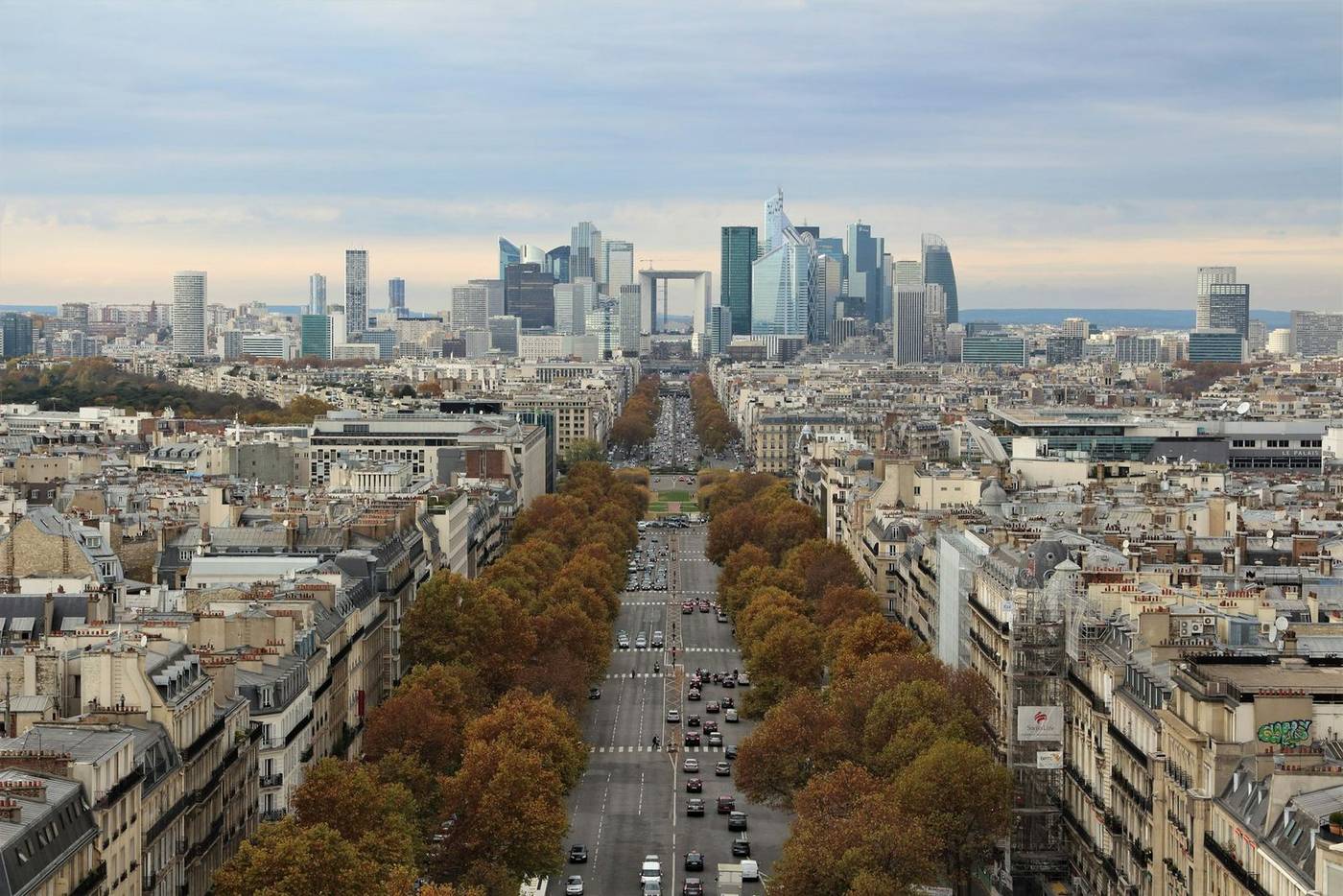
Take-up in the Île-de-France region is showing signs of a gradual recovery: 1.8 million m² forecast for 2024 and 2.0 million for 2025. However, vacancy rates remain high, particularly in the Croissant Ouest and La Défense: 15.8% in 2023, with around 16.2% expected in 2024. Demand is concentrated on central, high-quality locations: the Paris CBD remains attractive despite high rents, and modern, certified (LEED, BREEAM, HQE) and adaptable buildings are particularly sought after.
06ESG strategies and regulations
ESG criteria play an increasing role in investment decisions. Investors are focusing on reducing carbon emissions (green technologies, energy efficiency, renewable energy) and favour certified assets. The energy renovation of existing buildings generates economies of scale over the long term.
On the regulatory side, the tertiary decree (décret tertiaire) requires buildings of more than 1,000 m² to reduce their energy consumption by 40% by 2030, 50% by 2040 and 60% by 2050. The SFDR requires asset managers to disclose how ESG criteria are integrated into their decisions. The consequences for portfolios: certified assets are gaining in value and liquidity, while assets with high carbon emissions are subject to strategic divestment.
07Conclusion
In 2024, the French property market stands at a crossroads. The logistics, hotel, healthcare and residential sectors are showing promising signs. In this complex context, the role of property valuers becomes crucial: establishing objective and independent valuations, facilitating transactions and helping to overcome the imbalances between buyers’ and sellers’ expectations.
However, vacancy rates remain high, particularly in the Croissant Ouest and La Défense: 15.8% in 2023, with around 16.2% expected in 2024.
A question, a project?
Get in touch