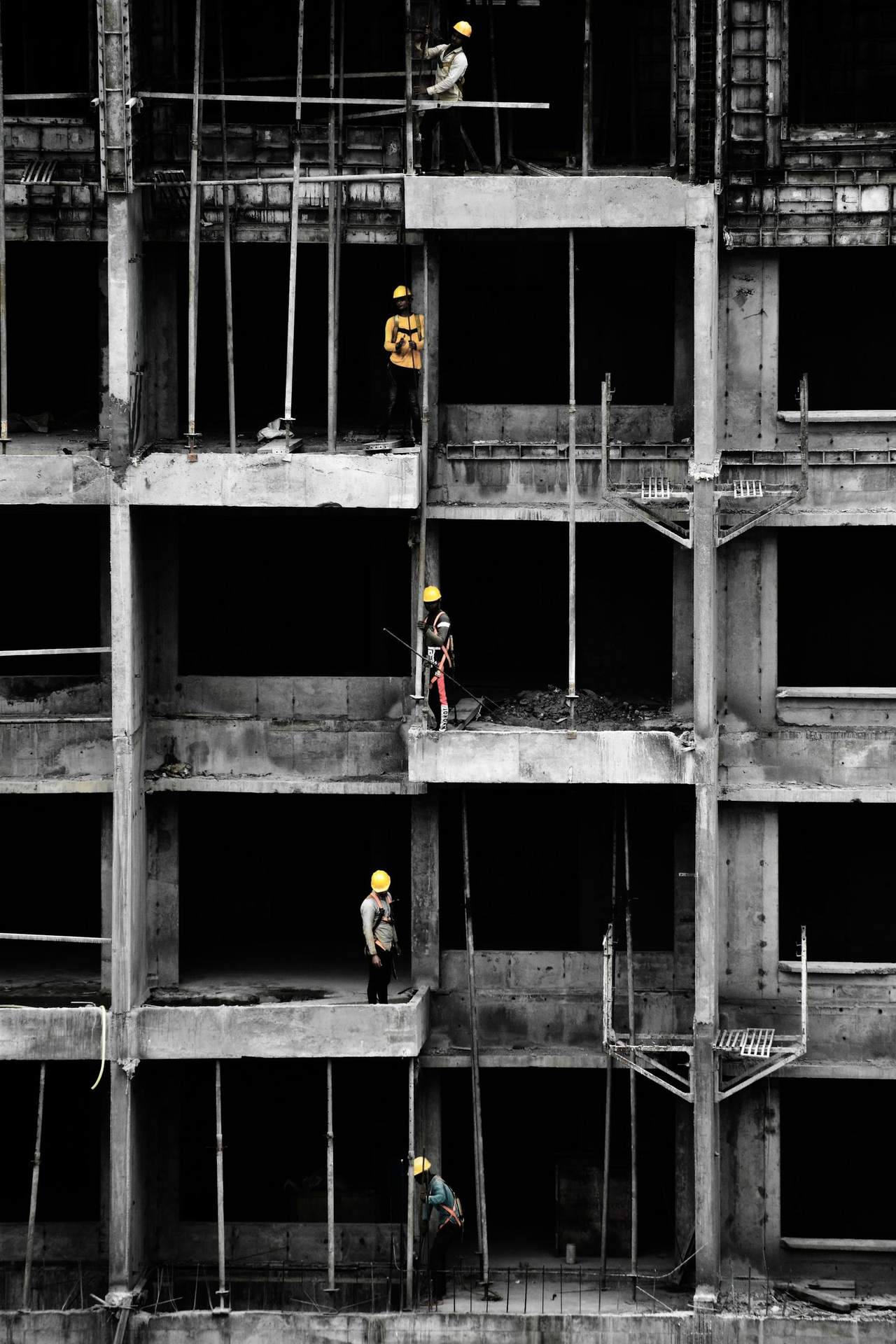
When a person builds or carries out works that fall within the scope of the building permit or the prior declaration without having been authorised by such documents, that person commits an offence.
In criminal matters, the limitation period is 3 years from completion of the works. In civil matters, the authorities have 10 years to bring an action for demolition. In administrative matters, the question of the limitation period is much more complex, and often overlooked, even though it can have significant consequences as soon as new works are planned.
This was recalled by the Conseil d’État (Council of State) in a decision of 3 February 2017 (application No. 373898).
01From no limitation period to a ten-year limitation period

For a long time, there was “administrative imprescriptibility”: case law held that where a building was erected or altered without a building permit or prior declaration, the illegality of the works was perpetual, since the works undertaken had no legal existence (CE, 9 July 1986, Mme Thalmy, No. 51172).
Accordingly, when applying for a building permit on an unlawful building, the owner had to submit an application covering all the building elements that had transformed the building as authorised by the original permit. It was therefore up to the applicant to regularise the works carried out without authorisation. The problem was that regularisation was not always possible under the planning rules in force at the time of the new application, leaving the applicant in a situation of considerable legal uncertainty.
Act No. 2006-872 of 13 July 2006 introduced Article L.111-12 of the French Planning Code, now codified as Article L.421-9: “Where a building was completed more than ten years ago, the refusal of a building permit or the decision to oppose a prior declaration may not be based on the irregularity of the original building with regard to planning law.”
02Exceptions that greatly reduce the scope of the rule
This ten-year administrative limitation period is subject to numerous exceptions, including:
- where the building exposes its users or third parties to a risk of death or serious injury
- where an action for demolition has been brought under the conditions of Article L.480-13
- where the building is located in a national park or a listed site
- where the building is located on public property
- where the building was constructed without a building permit
- in certain zones covered by risk prevention plans
The exception relating to buildings constructed without a building permit has given rise to much debate, since it so greatly reduces the scope of the rule. In its decision of 3 February 2017, the Conseil d’État confirmed its strict interpretation: all works carried out without a building permit, whatever their scale, are excluded from the limitation period.
03The impact on property valuation
When valuing a property, the property valuer must scrupulously examine whether the buildings comply with planning rules. An unauthorised construction, even an old one, can entail significant legal and financial risks that affect the value of the property.
The discovery of unauthorised works can call into question the legality of the property and generate unforeseen costs for the owner: fines and the costs of bringing it into compliance. The ten-year administrative limitation period adds a crucial time dimension to the valuation, since it determines the extent to which irregularities can be penalised or require regularisation. The valuer must factor the risk of regularisation into the analysis, which can substantially influence the estimated value of the property.
The valuer must factor the risk of regularisation into the analysis, which can substantially influence the estimated value of the property.
A question, a project?
Get in touch